
 Recently, as I delighted over the sight of my brand new two-volume New Shorter Oxford English Dictionary stationed commandingly amongst the paperbacks and graphic novels on my bookshelf, I thought about how anachronistic a dictionary seems these days. Can you remember the last time you looked up a word in an actual, physical dictionary? (I can, but as we’ve well established I’m a severe dweeb.) Not that I don’t use the Web to look up words and synonyms; Merriam-Webster.com is one of the few buttons on my bookmark toolbar and it’s the quickest way, hands down.
So I figured, if I’m using online dictionaries and thesauri even while being nerdily enamored of the yellowed, brittle pages of my long-coverless Webster’s New World and the fragile leaves of my long-coveted OED, then most people probably go even more frequently, if not exclusively, to the Internet for definitions. And what are they most often looking up? To my surprise, when I typed “definition of” into Google, I found that people aren’t searching Cyberspace for mere meanings, they’re searching for Meaning.
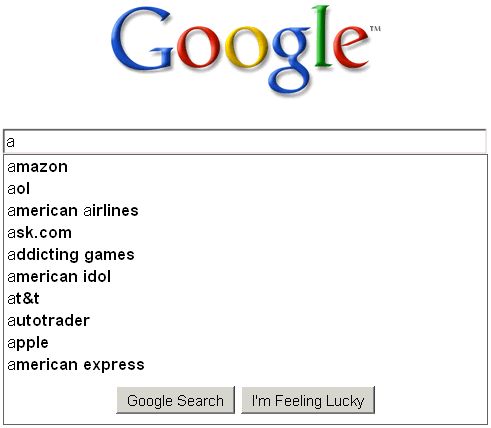
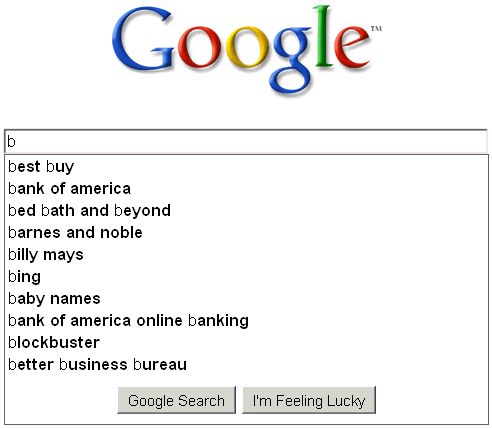


 The World Wide Web is just brimming with useful information, neatly packaged in quickly digestible bite-sized morsels of information, tagged and labeled for easy finding with the superlatives we crave. In our fast-paced society you don’t just want a way to a trimmer tummy, you want the Fastest Way to Flatter Abs.
  Strapped for cash? What’s the cheapest way to get to Mexico? (Try deportation.) Sexiest celebrities. Most extreme car chases. Man versus Beast. (OK, I got carried away. I just wanted an excuse to link to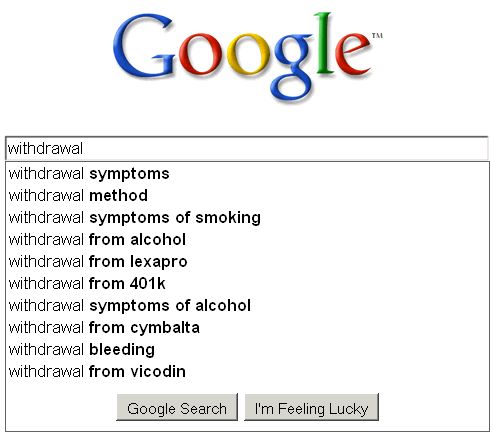


 Welcome back. Hope your long Labor Day weekend gave you a good amount of rest, and time to reflect on, uh, labor I guess. Shows what I know about national holidays.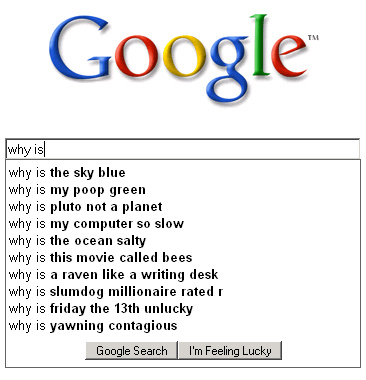
 Google is smart. And Google knows what you’re thinking. Soon you’ll be able to let Google do the thinking for you, but for now all it can do is help.

 No Happy Medium